

Not during the procedure. Combination of topical and local anesthetic injection completely numbs the toe. You may feel pressure, but not pain. Some soreness afterward is expected, but manageable.
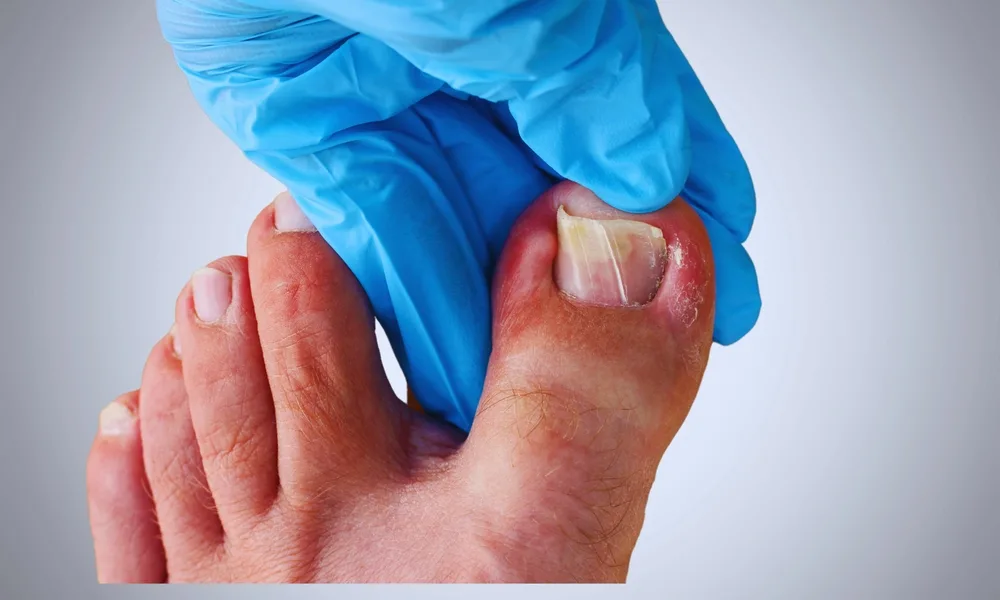
Advanced, minimally invasive relief for painful toenails by Dr. Solomon
Ingrown toenails can cause persistent pain, swelling, and infection, interfering with your ability to walk, wear shoes comfortably, or enjoy your daily life. Dr. Solomon offers expert, minimally invasive ingrown toenail removal surgery in the office to relieve pain, correct the problem at its source, and help you get back on your feet quickly. He combines surgical precision with aesthetic care to ensure a fast, clean recovery with minimal discomfort or visible scarring. Whether you’re dealing with chronic ingrown nails or an acute infection, our approach is tailored, safe, and patient-focused.
An ingrown toenail occurs when the edge of the toenail, usually the big toe, grows into the surrounding skin. This can lead to redness, swelling, warmth, pain, and sometimes infection. The result is often discomfort that worsens with pressure or friction from footwear, making even simple activities uncomfortable.
Common causes include:
If left untreated, an ingrown toenail can become infected, cause abscess formation, and in rare cases, spread to the surrounding skin or even deeper tissues, especially in individuals with diabetes or vascular disease.
Not all ingrown toenails require surgery. In early stages, they may respond well to conservative treatments such as warm water soaks, antibiotic ointment, proper nail trimming, and wearing wider shoes. However, surgery may be necessary if:
Dr. Solomon customizes each procedure based on your condition, toe structure, and recurrence history. Treatment options include:
This minimally invasive approach removes just the edge of the nail that’s causing irritation while leaving the rest intact.
In cases where ingrown nails repeatedly return, Dr. Solomon may remove the nail root (matrix) to stop the offending portion of the nail from growing back.
Rarely required, this involves removing the entire nail. It is typically reserved for patients with extensive infections, fungal involvement, or deformity.
Your visit begins with a comprehensive consultation. Dr. Solomon will:
Post-procedure care is simple and manageable:
You may notice some drainage or mild swelling initially, which is normal. Most patients return to daily activities within 24–48 hours. Follow-up appointments help ensure proper healing and address any concerns.
Dr. Solomon’s precision techniques offer multiple patient benefits:
Dr. Solomon’s training in foot and ankle reconstruction gives him unique insight into treating even the most complex toenail issues with finesse. His goal isn’t just to remove the nail, it’s to restore your confidence, comfort, and mobility.
Every step of the process, from consultation to follow-up, is done with precision and compassion. Dr. Solomon’s dual focus on medical function and aesthetic detail ensures that your toe not only feels better but looks better too.
Patients trust Dr. Solomon for his:
You may be an excellent candidate for ingrown toenail removal if:
Ignoring an ingrown toenail can lead to more serious issues:
Dr. Solomon emphasizes early, conservative intervention, but when that fails, minimally invasive surgery is often the best course.
After treatment, Dr. Solomon will provide a full prevention plan:
Our boutique clinic offers:
Dr. Solomon’s reputation in Beverly Hills is built on trust, patient satisfaction, and long-lasting outcomes. Whether you’re a high-heel enthusiast, an athlete, or someone who simply wants healthy, pain-free feet, we’re here to help.
Don’t let a small toenail problem become a major issue. Solomon Aesthetic Podiatry is conveniently located at 433 North Camden Drive, Suite 610 in Beverly Hills. We are open Monday through Sunday, 9:00 AM to 9:00 PM, offering flexible hours to fit your schedule. Call today and find fast, gentle relief with a procedure designed around your needs.
Call us now: (310) 876-5744
Relief starts here. Let us help you walk comfortably again, with confidence and care.
Not during the procedure. Combination of topical and local anesthetic injection completely numbs the toe. You may feel pressure, but not pain. Some soreness afterward is expected, but manageable.
Yes. Since only local anesthesia is used, you can safely drive home unless otherwise advised.
If a partial nail avulsion is performed, most of your nail remains. Even with a matrixectomy, the nail will often look more narrow but neat.
If the root isn’t destroyed, regrowth occurs within 6–12 months. If the matrix is removed, the affected portion will not return.
Recurrence risk is very low with matrixectomy. Partial nail avulsions may result in regrowth, which is why matrix treatment is often recommended for chronic cases.
After 24–48 hours, gentle washing with soap and water is allowed. Avoid soaking until Dr. Solomon gives clearance.
In some cases, yes. If the nail is infected with fungus and removed, antifungal treatments can be more effective post-surgery.
Meet with Dr. Solomon for a complimentary 15-minute consultation to discuss your concerns and goals. Discover personalized, expert podiatric care focused on comfort, precision, and long-term results.